Apple HomeView reviews praise smart home control but differ on household privacy
First reviews of Apple's $299 square smart display agree on its smart home and cooking strengths, but one reviewer could read her daughter's texts on it.
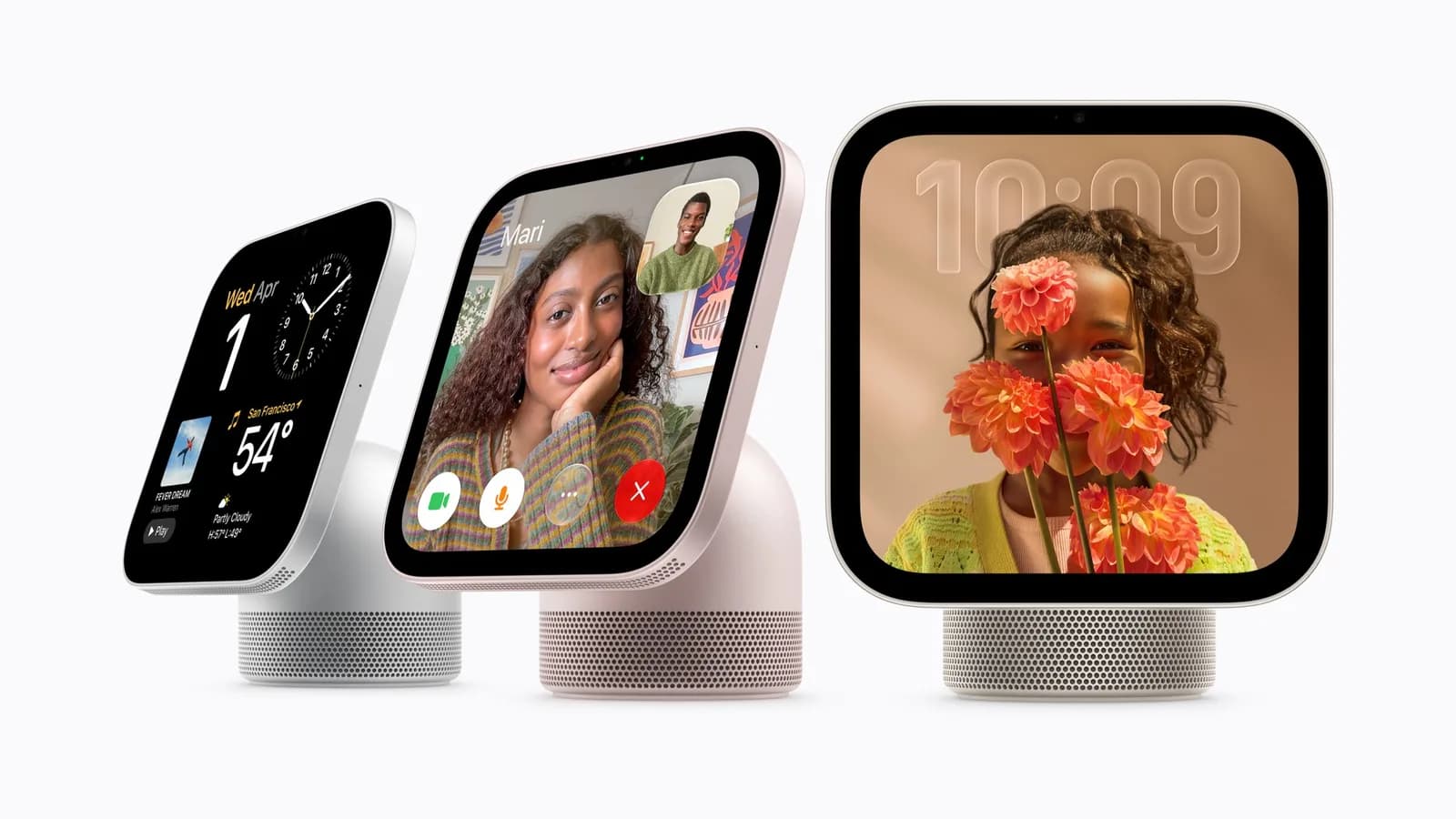
- What happened
- The Verge, Engadget and 9to5Mac published hands-on reviews of HomeView, Apple's first smart display, built around a 7-inch square screen and Siri AI.
- What’s new
- HomeView is Apple's first Home hub with an always-on screen, combining Thread, Matter, multi-user face and voice recognition, and iPhone-dependent personal features.
- Why it matters
- Households weighing it need to know it leans on a nearby iPhone or iPad and that profile separation did not always hold in testing.
Apple's HomeView smart display has drawn its first full reviews, and the three outlets broadly agree on what it does well: smart home control, guided cooking from web recipes, and passable sound from a small device. Where they part ways is on how well it keeps family members' personal data apart.
Price, hardware and a spec mismatch
The Verge reports that both the tabletop and wall-mounted versions cost $299, which it says makes HomeView Apple's cheapest screened device after the Apple Watch SE. The wall version ships without a mount or power adapter. The Verge lists Schneider Electric mounts at $59.99 for USB-C and $79.99 for hardwired AC, with a power-over-Ethernet option at $129.99, and estimates the total at around $400 once Apple's $39 adapter is added. Engadget notes the tabletop model includes a 30W adapter and that a 20W minimum supply costs $19.
All three reviews describe a 1,088 by 1,088 square screen, but they disagree on sharpness: 9to5Mac gives the pixel density as 220 pixels per inch, while Engadget says 200. Both cite a 500-nit peak and a 0.3-nit minimum. None of the reviewers found physical buttons on the device, and both 9to5Mac and The Verge said they missed having volume controls.
On sound, 9to5Mac places it between the HomePod mini and the full-size second-generation HomePod; The Verge calls it close to a HomePod Mini 2 with slightly more bass; Engadget lists category-leading sound among its pros. The wall model lacks the base's woofer and passive radiators.
Conflicting accounts of profile privacy
HomeView supports up to six people and uses its camera and voice recognition to show each one their own messages, calendar and reminders. Personal features depend on an iPhone or iPad: Engadget says the device must be nearby, recently unlocked and enrolled in the shared home, and that the A18 chip's Secure Exclaves process face and voice data without exposing it to the operating system, according to Apple.
Testing results varied. 9to5Mac said that when it tried to open Messages on his wife's profile, HomeView refused because it could not verify his identity, and repeated attempts disabled facial recognition until she authenticated on her iPhone. Engadget described the recognition as stopping onlookers from seeing texts after the owner walks away. The Verge, however, reported that HomeView let its reviewer stay on her teenage daughter's profile and scroll her texts several times, even after recognizing the reviewer and offering to switch; she said this did not happen every time but often enough to be a problem.
Recipes and app limits
The Safari-based cooking mode, which turns a recipe page into step-by-step slides with timers, was a highlight in all three reviews. Both 9to5Mac and Engadget found it inconsistent: 9to5Mac said it struggles with recipes split across pages, and Engadget said some sites fell back to a single scrolling block, attributing that to how publishers format recipes rather than to Apple.
There is no App Store. Third-party apps arrive through a CarPlay-based system currently limited to audio and video, per 9to5Mac, and The Verge found HomeView could not run some Siri shortcuts its HomePods handle, nor use its camera as a motion sensor. The Verge scored it 7 and Engadget 8.4 out of 10.