Nvidia announces Rubin HPC GPU for scientific computing in 2028
The chip promises more than 50,000 CUDA cores and NVLink 7, but Nvidia has given no performance, memory or FP64 details yet.
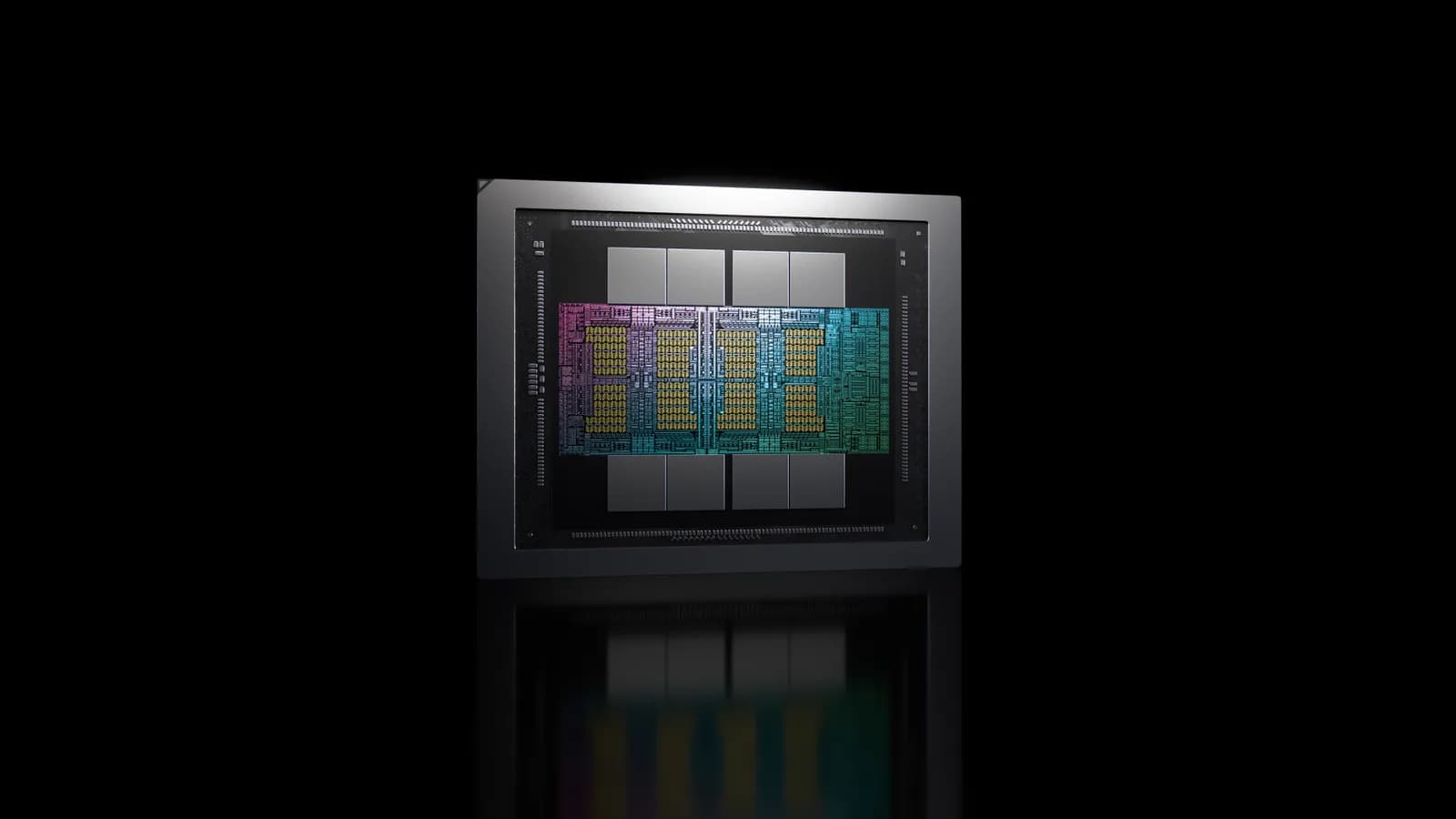
- What happened
- Nvidia announced Rubin HPC, a GPU for simulation and data processing in science, engineering and analytics, at SC26 on 16 November.
- What’s new
- Nvidia says the chip has more than 50,000 CUDA cores, sparse data acceleration and seventh-generation NVLink, with availability expected in 2028.
- Why it matters
- ServeTheHome sees it as Nvidia returning to traditional HPC after Blackwell largely skipped that market, which AMD and Intel are also targeting.
Nvidia has announced Rubin HPC, a GPU aimed at simulation and data processing for science, engineering and analytics. It unveiled the chip at the SC26 supercomputing conference on 16 November. The company says Rubin HPC is part of its Vera Rubin platform and is expected to be available in 2028.
What Nvidia has disclosed
Nvidia's announcement says Rubin HPC will carry more than 50,000 CUDA cores on a single GPU, which the company calls a record. It also lists a sparse data acceleration feature meant to keep those cores supplied with data, and seventh-generation NVLink for connections between GPUs.
Nvidia describes a balanced design that grows data movement alongside compute. It argues that workloads such as climate models, genomic analysis and financial risk spend much of their effort collecting scattered values from very large datasets.
The company pitches the chip at AI agents that run simulations to test ideas. "For agents tackling science and engineering, faster simulation means faster discovery," said Ian Buck, Nvidia's vice president of hyperscale and high-performance computing.
How it compares with current Rubin
Tom's Hardware notes that today's Rubin GPU has 224 SMs and 28,672 CUDA cores. It argues that reaching the Rubin HPC core count would need more dies on a package, possibly in a layout similar to the four-die Rubin Ultra. ServeTheHome also reads the specifications as closer to a Rubin Ultra derivative. It speculates that the 2028 timing could give the chip newer HBM4e memory. Nvidia has confirmed neither point.
ServeTheHome calls Rubin HPC Nvidia's first significant HPC-class part since Hopper, after the company largely sat out that market with Blackwell. For comparison, the outlet lists 18,944 CUDA cores for the B200 and 16,896 for the H200.
FP64 is the open question
Both outlets report that Nvidia has not shared memory capacity or bandwidth figures, and ServeTheHome says no performance figures were given either. According to Tom's Hardware, Nvidia also did not say whether the chip shifts resources toward native FP64, the double-precision math that AMD and Intel are emphasising for their own GPUs at the conference.
ServeTheHome reports that Nvidia stresses support for precisions from NVFP4 up to FP64. It calls FP64 the figure to watch. By its account, Nvidia's FP64 performance has stayed a bit under 40 TFLOPS since Hopper, and Blackwell Ultra manages less than 2 TFLOPS.
Rubin HPC will face competition when it arrives. ServeTheHome notes that AMD plans to launch its HPC-focused Instinct MI430X in 2027, and that Intel is preparing its PCIe-based D-Series GPU.