Google makes Gemini's task agent free in six countries
Gemini's Task mode, which can phone businesses, shop and pay on a user's behalf, now runs on the Gemini 4 Hydrogen model, and some features start in the US.
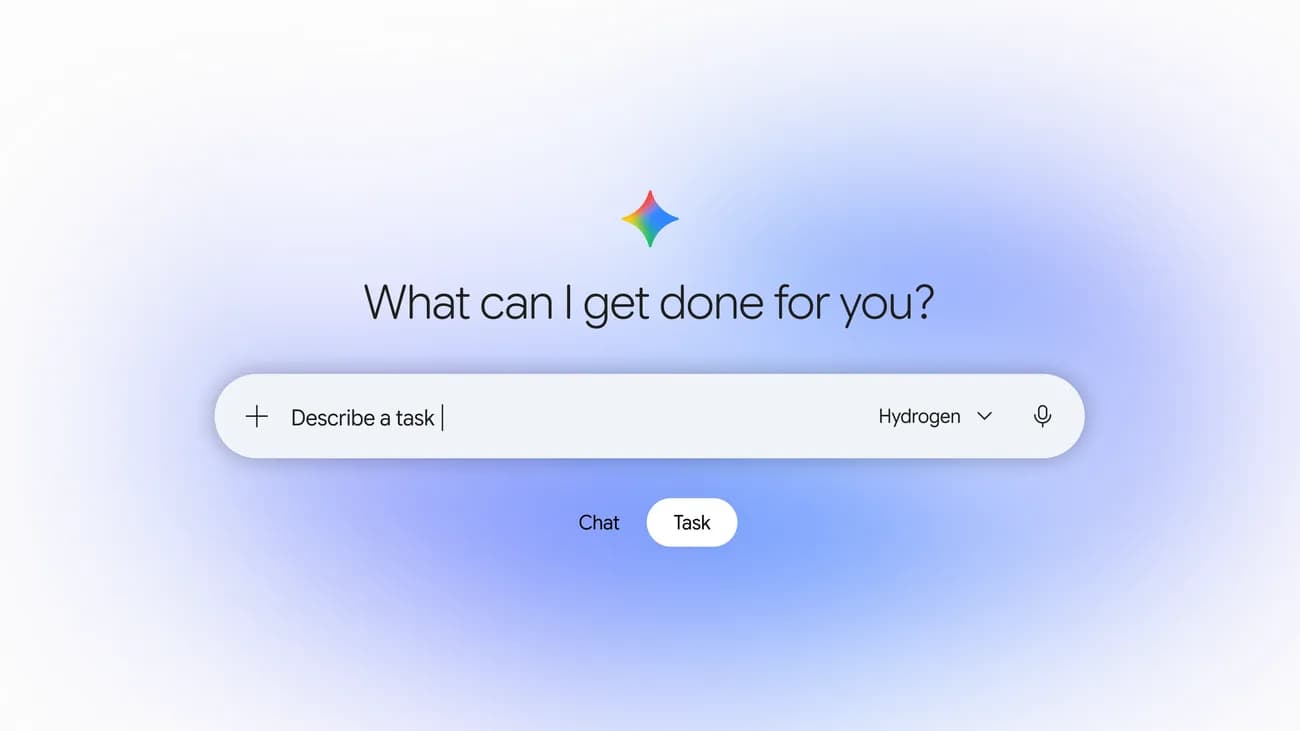
- What happened
- On 17 November Google began rolling out Gemini's Task mode free of charge in the US, Japan, Korea, Canada, Australia and India.
- What’s new
- According to 9to5Mac, the feature, previously called Spark, used to require an AI Pro subscription.
- Why it matters
- Free users can now let Gemini place calls, make purchases and handle chores using data already stored in their Google accounts.
Google began rolling out Gemini's task feature on 17 November at no charge to users in the US, Japan, Korea, Canada, Australia and India. The feature runs on Google's new Gemini 4 Hydrogen model, and Google says the rollout reaches hundreds of millions of people. A set of advanced features is launching in the US first. According to 9to5Mac, the capability was previously called Spark and was limited to AI Pro subscribers. 9to5Mac reports that it was folded into the main Gemini app in October.
Users move a toggle in the app from Chat to Task and then describe the job. In its announcement, Google gives examples that include phoning several businesses at the same time to book an appointment, going through bills, and buying products. Google says Gemini tells the person on a call that it is an AI, and that businesses can opt out. Purchases go through the Agent Payments Protocol (AP2) with Mastercard and Visa, and Google says American Express support is coming soon. Users can set a spending cap, and receipts are sent to Google Wallet, which Google is now bringing to iOS. Forwarding emails to Gemini and texting it are available in the US first.
Google says every task runs inside a hardware-isolated virtual machine assigned to the user's account. The system also uses prompt-injection filters and Google Safe Browsing, and it asks the user to confirm before it completes a purchase. Google acknowledges that Gemini still makes mistakes. On some websites, Gemini returns control to the user to click the last button.