Tesla will build Cybercabs at its Berlin gigafactory from 2029
Tesla plans a €3 billion production hall in Grünheide rated for up to 1 million Cybercabs a year, though EU rules currently cap driverless vehicle registrations at 1,500.
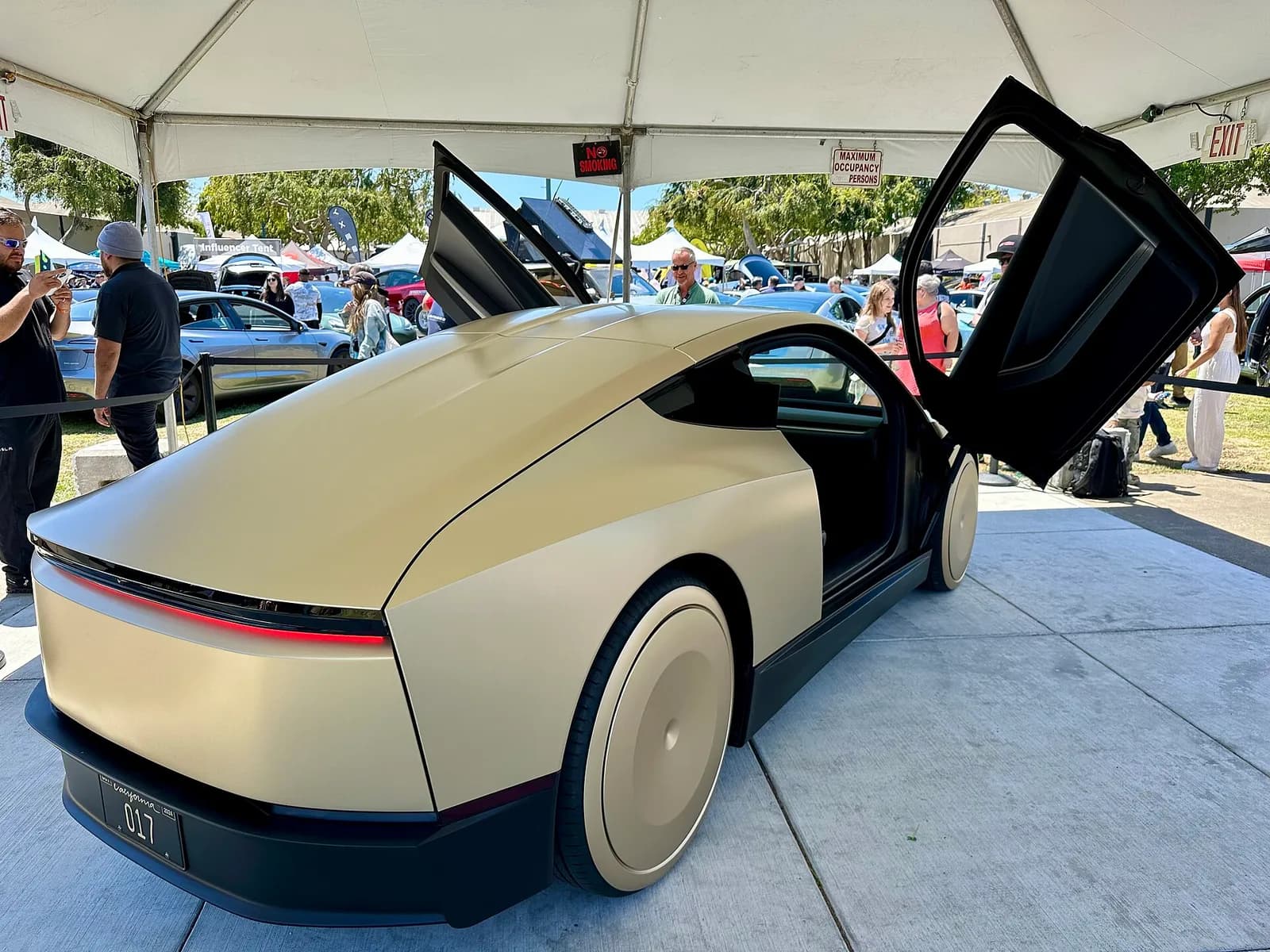
- What happened
- Tesla announced a €3 billion expansion of its Berlin gigafactory to build Cybercab robotaxis, with production planned for 2029.
- What’s new
- Tesla had already planned a second hall at the site, but this is the first time it has said the hall will build Cybercabs.
- Why it matters
- The plant would be rated for up to 1 million steering-wheel-free vehicles a year in a region where Tesla has no approval to run them driverless.
Tesla will spend €3 billion on a new production building at its Grünheide plant near Berlin to make the Cybercab, its two-seat autonomous vehicle with no steering wheel or pedals. The hall is designed to turn out up to 1 million vehicles a year, with production planned for 2029. André Thierig, who runs manufacturing at the site, announced the plan on 16 November.
What Tesla is building
According to Electrek, Tesla's statement says the money covers a production hall north of the current plant, ancillary buildings and a second wastewater treatment plant. Tesla intends to submit the building application before the end of 2026 and begin construction in the first half of 2027. Tesla says the site will become its most technologically advanced factory.
Electrek notes that the hall itself is not a new idea. Tesla's 2023 permit filings already described a path to 1 million vehicles a year at Giga Berlin. What changed is the product. Electrek reports that Giga Berlin still makes only the Model Y and has never reached the 500,000 cars a year Tesla promised when the plant opened in 2022. TechCrunch adds that Tesla plans to stop building the Cybertruck next year, partly to free space for Cybercab output in Austin, Texas.
The European approval gap
Electrek says Europe's type-approval path for fully driverless vehicles is a small-series scheme. It caps each vehicle type at 1,500 registrations annually EU-wide. Nor does Tesla hold European approval anywhere for unsupervised driving. Its supervised system, sold there as Tesla Assisted Driving, still requires an attentive driver. Electrek notes that the European Commission has signalled it would like to extend large-series approval to other kinds of driverless use, and that work is under way on a UN regulation covering automated driving systems. In its own commentary, Electrek calls the investment extremely risky and doubts that any unsupervised Cybercab will carry paying passengers in Europe by 2029.
How many Cybercabs are on the road
The two outlets give different counts for Texas. TechCrunch puts the number at about 573 Cybercabs, out of roughly 1,307 Tesla robotaxis registered in the state. Electrek reports 463 registered as of late October. TechCrunch says the Cybercabs have had no major incidents in their two-plus months of operation. Electrek cites its own analysis of the wider Robotaxi programme, which put the crash rate at one every 57,000 miles with a safety monitor aboard. TechCrunch also reports that US federal regulators are investigating Tesla's self-certification of the Cybercab.